WarpSpeed KVM
A self-hosted KVM-over-IP appliance that gives BIOS-level remote control of any computer from a browser — HDMI capture and real USB emulation on a Raspberry Pi.
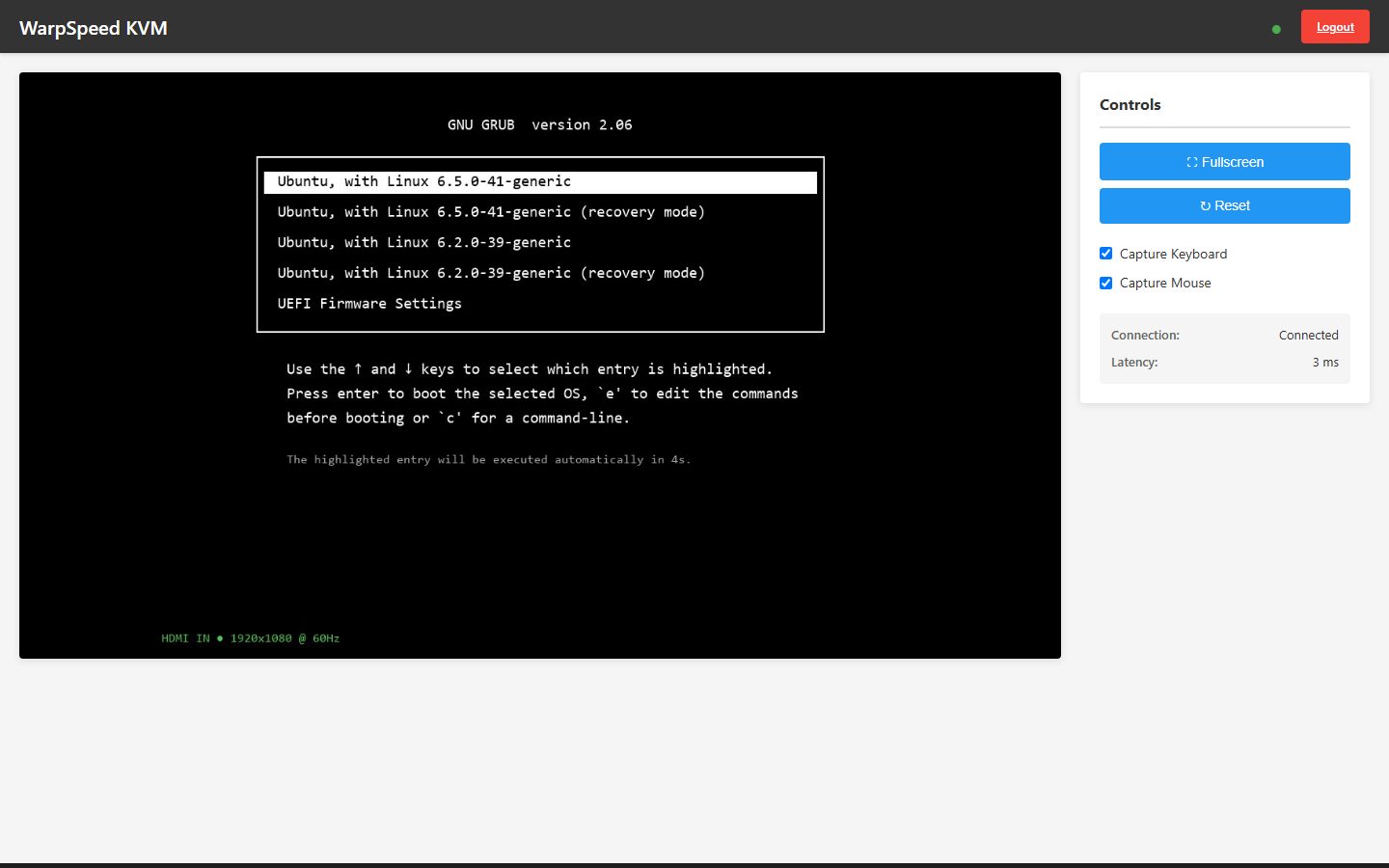
Remote-desktop software has a blind spot: it only works when the operating system is healthy enough to run it. When a server is stuck at a boot menu, a machine needs a fresh OS install, or firmware settings need changing, remote desktop is useless — you need to be physically there. WarpSpeed KVM solves that with a tiny hardware appliance: a Raspberry Pi that sits between you and the machine, capturing its HDMI output and presenting itself as a real USB keyboard and mouse.
The magic is in the input path. The Pi impersonates physical USB hardware at the descriptor level — hand-authored HID report descriptors define a composite keyboard-and-mouse device through the Linux USB Gadget API, and the target computer genuinely cannot tell it isn’t a person at a keyboard. Every browser keystroke and mouse movement is translated into raw USB HID reports, with full modifier tracking so combinations like Ctrl+Alt+Del work exactly as they should.
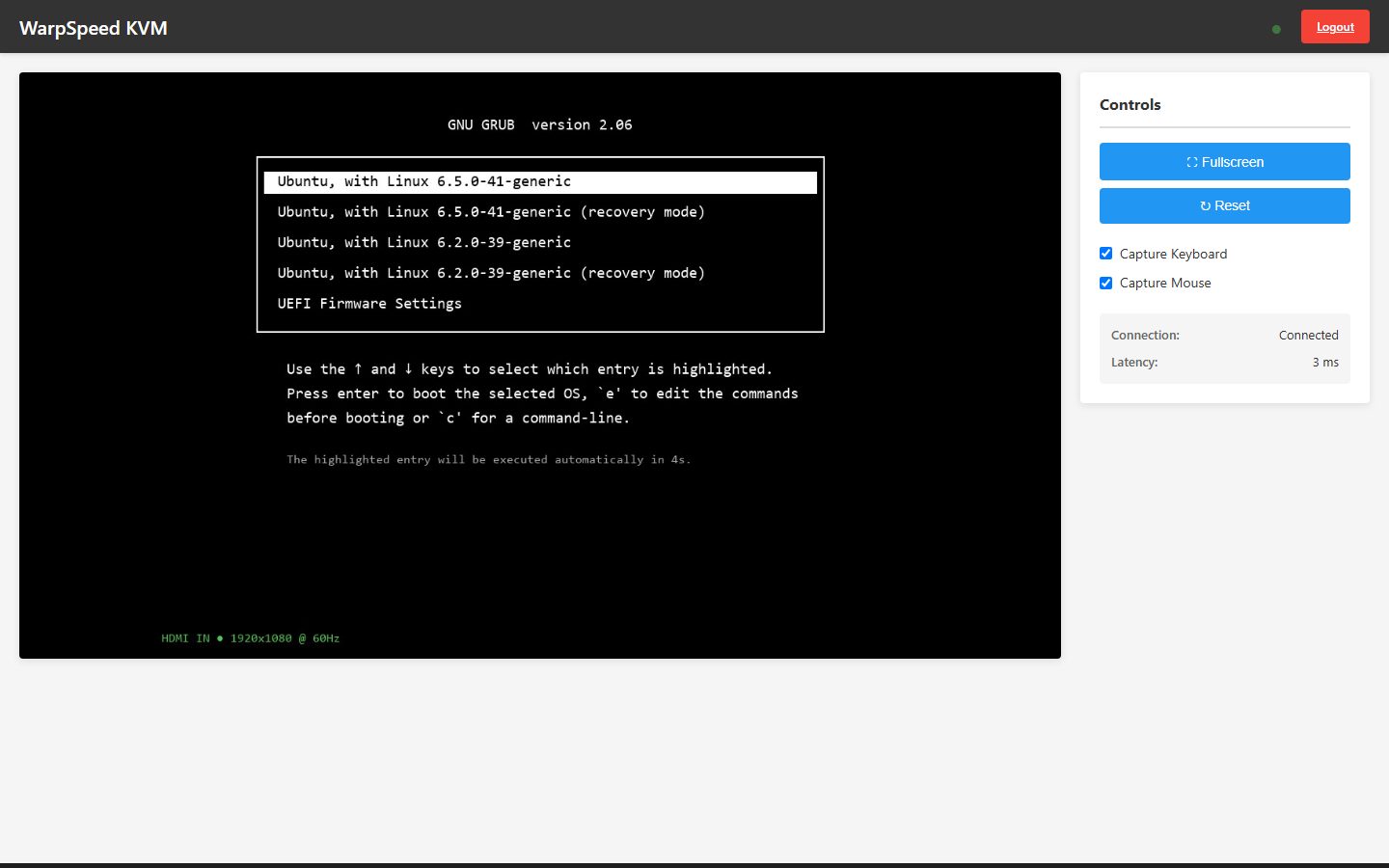
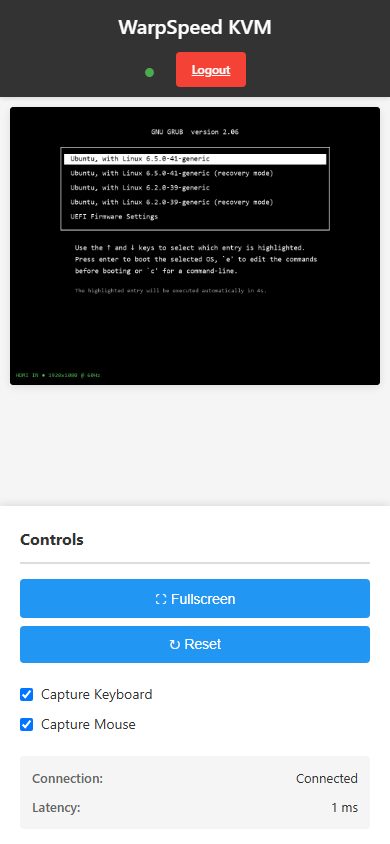
Video flows the other way: an HDMI capture dongle feeds the machine’s display to the browser as a low-latency stream, with a live connection and latency readout in the control panel. The result is a complete remote console — you can watch the machine POST, enter the BIOS, pick a GRUB entry, or reinstall the OS, all from a browser tab.
The operations side got the same care as the engineering: a single provisioning script installs and configures everything on a fresh Pi — dependencies, video streaming, an nginx reverse proxy with WebSocket support, and three systemd services with proper boot ordering. Health-check endpoints monitor the capture device and USB gadget state, and the project ships with deployment, hardware, and architecture documentation.
Projects like this are why clients come to a studio instead of a page builder: this one system spans browser JavaScript, WebSockets, Python, kernel device files, USB protocol descriptors, and Linux service management. Whatever your idea touches — web, hardware, systems, or all three — we can build it.
Highlights
- BIOS-level remote control — works even when the OS is down or uninstalled
- Real USB keyboard and mouse emulation via Linux USB Gadget API
- Hand-authored HID report descriptors for a composite input device
- Full keystroke pipeline with modifier tracking (Ctrl+Alt+Del and friends)
- HDMI video capture streamed to the browser with live latency readout
- Browser-based console — no client software to install
- Health-check endpoints for video and USB gadget state
- One-command provisioning: nginx, systemd services, and streaming setup
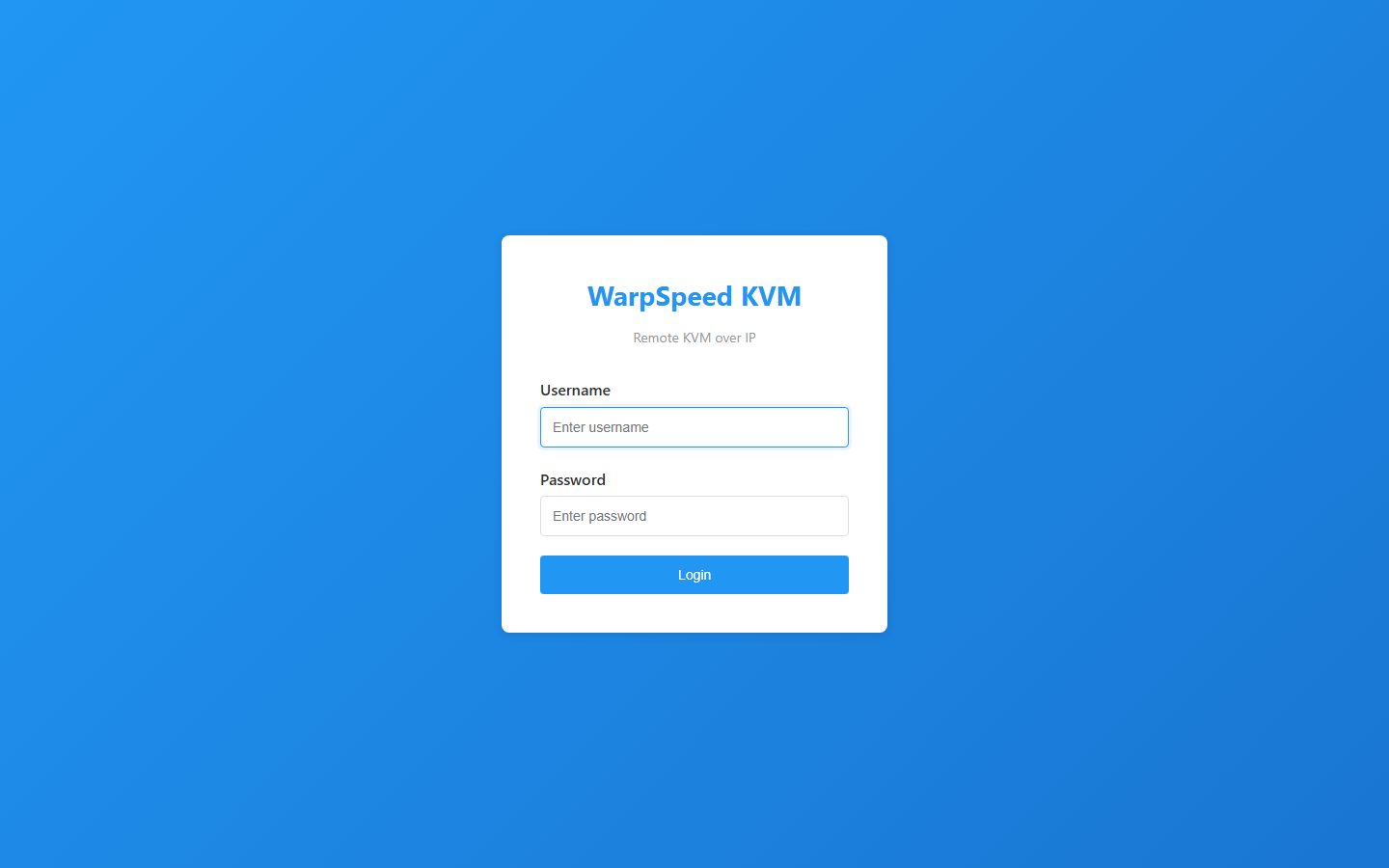
- Session login with per-deployment credentials
- Full deployment, hardware, and architecture documentation included
Screenshots
Want something like this?
Tell us about your business and we will show you what a custom-built site can do for it.
Start a project